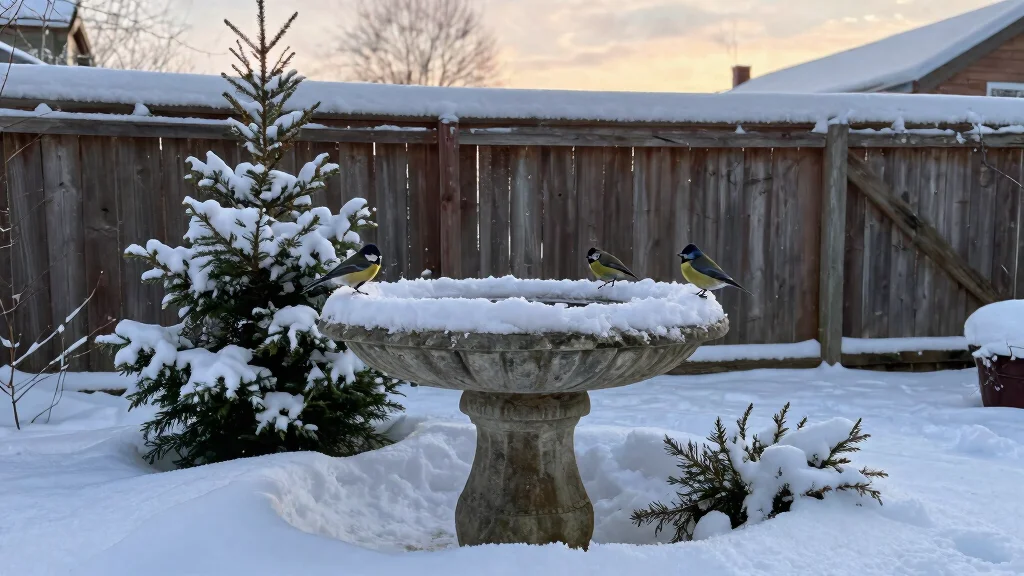
As winter rolls in, the beauty of the season often comes with challenges, especially for our feathered friends. With temperatures dropping, maintaining a bird bath becomes essential for winter wildlife support. I created this post to help you navigate the ins and outs of winter bird bath maintenance in small urban gardens. You can make a difference for birds who rely on these water sources during the colder months.
If you’re someone who enjoys backyard birding or has a passion for gardening, this guide is tailored just for you. Here, you’ll discover practical and effective tips that will keep your bird bath functional, safe, and inviting. From choosing the right location to maintaining clean water daily, I’ve put together 9 essential winter bird bath maintenance tips that are actionable, easy to follow, and will enhance your winter garden experience.
By the end of this guide, you’ll feel empowered to create a welcoming environment for birds while ensuring their hydration needs are met. With just a few steps, your bird bath can become a lively hub of activity, bringing joy to both you and the wildlife around you. Let’s dive into these tips and become champions of winter bird care!
Key Takeaways
– Choose the Right Location: Place your bird bath in a sunny spot to prevent freezing and attract more birds.
– Ensure Clean Water Daily: Regularly change the water to keep it fresh and free from contaminants.
– Use Heated Bird Baths: Consider heated options to ensure the water remains liquid even in freezing temperatures.
– Regularly Check for Ice: Monitor the bath frequently, breaking any ice that forms to keep it accessible.
– Add Food Sources Nearby: Incorporate bird feeders or native plants around your bath to encourage birds to visit.
1. Choose the Right Location
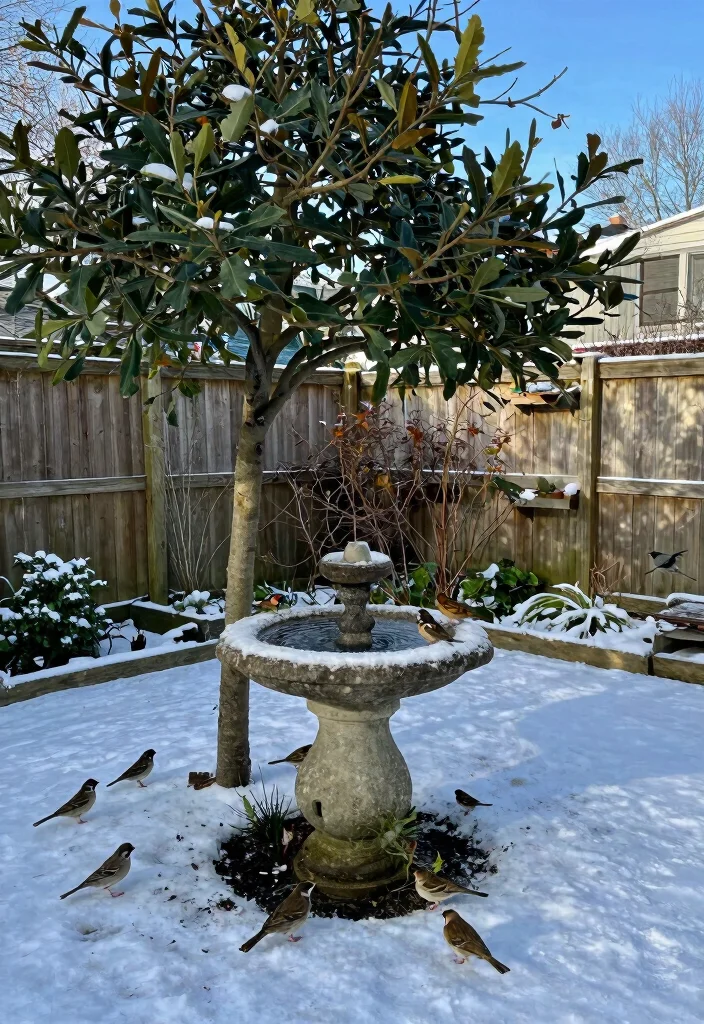
Selecting the ideal spot for your bird bath is key to attracting feathered friends and ensuring they feel secure while visiting. Seek out a sheltered area, ideally close to shrubs or trees that provide protection from predators. Position the bath where you can easily admire it from your window, adding beauty to your garden and enhancing your birdwatching experience. Avoid placing it too near feeding stations to prevent stress for the birds as they enjoy their time.
Start by observing your yard to find a spot that balances visibility and safety. Aim for ground that’s flat and dry to keep water from pooling. Ensure you can reach the bath easily for cleaning and maintenance.
Key placement tips:
– Choose a location visible from your favorite viewing spot.
– Avoid eaves or gutters to prevent debris accumulation.
– Level the area to prevent water from accumulating.
– Ensure easy access for regular cleaning.
A thoughtfully placed bird bath transforms your garden into a vibrant sanctuary, attracting various bird species all winter long.
2. Ensure Clean Water Daily
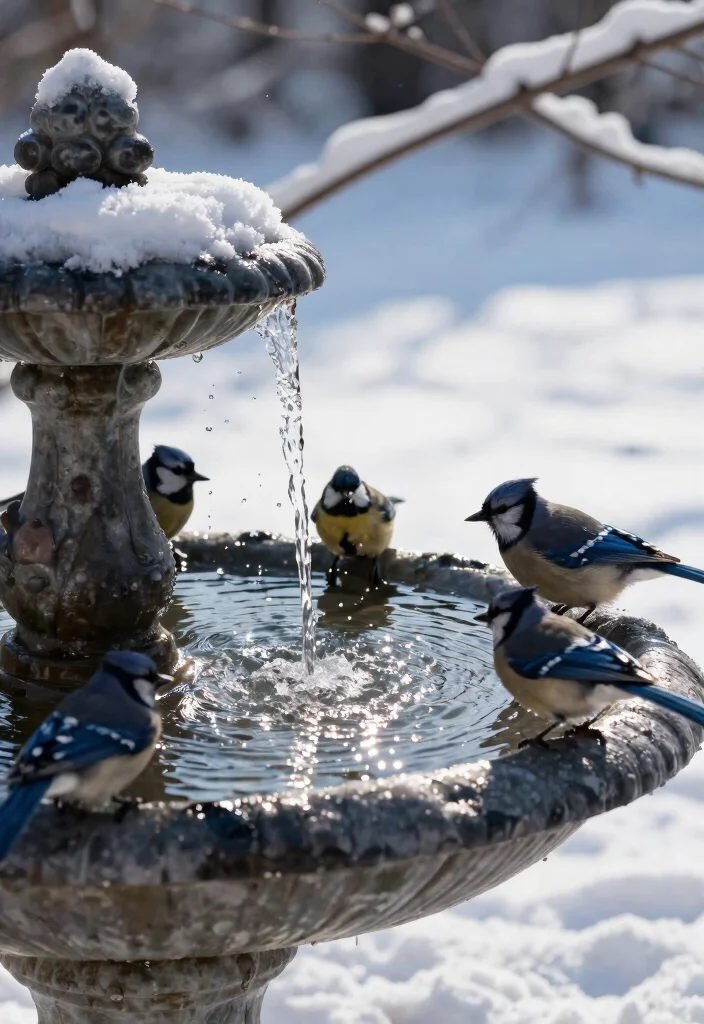
Keeping the water fresh in your bird bath is vital, especially during winter when birds depend on it more than ever. Birds require clean water for drinking and bathing, and ice can form quickly when temperatures drop. Make it a habit to check and refresh the water daily. If the temperature falls below freezing, consider a bird bath heater to keep the water inviting and liquid.
To maintain cleanliness, empty the bath regularly and scrub it with a bird-safe cleaner to eliminate algae. Rinse it well to avoid any residue, then refill with fresh water, ensuring it’s shallow enough for smaller birds.
Cleaning steps to follow:
– Empty the bath and scrub with a non-toxic cleaner.
– Rinse thoroughly before refilling.
– Ensure the water is shallow for easy access.
Providing clean water creates a welcoming environment, making your garden a winter haven for wildlife.
Did you know ice can form in minutes when temperatures dip? In winter, birds drink and bathe more than you expect, so refreshing water daily boosts visits by up to 40%. Winter bird bath maintenance tips really matter.
Ongoing Maintenance & Care Guide
Maintenance Schedule:
Daily/Weekly Tasks:
– Check Water Level: Ensure the water level is sufficient for birds to bathe. You should refill it if it’s low. ⏱ (5 minutes)
– Clean Water: Replace the water daily to keep it fresh and clean. This helps prevent algae growth. ⏱ (10 minutes)
– Inspect for Debris: Look for leaves or debris that may have fallen in. Remove any obstructions to keep the bath inviting. ⏱ (5 minutes)
– Monitor Temperature: On chilly days, keep an eye on the temperature. If it drops, be ready to check for ice. ⏱ (5 minutes)
Monthly/Seasonal Tasks:
– Thorough Cleaning: Once a month, empty and scrub the bath with a brush. Use a vinegar solution to kill any bacteria. ⏱ (30 minutes)
– Ice Check: In winter, regularly check for ice buildup and break it up if necessary. Ensure birds have access to open water. ⏱ (15 minutes)
– Inspect for Damage: Look for any cracks or issues with the bird bath. Repair them promptly to maintain usability. ⏱ (20 minutes)
– Add Natural Elements: Consider placing stones or branches in the bath to provide resting spots for birds. This makes it more appealing. ⏱ (15 minutes)
– Food Sources: Place bird feeders nearby to attract more birds. This enhances your backyard birding experience. ⏱ (15 minutes)
Maintenance Summary Table:
| Task | Frequency | Difficulty | Time Needed |
|————————–|————|————|————-|
| Check Water Level | Daily | Easy | 5 minutes |
| Clean Water | Daily | Easy | 10 minutes |
| Inspect for Debris | Daily | Easy | 5 minutes |
| Thorough Cleaning | Monthly | Moderate | 30 minutes |
| Ice Check | Monthly | Moderate | 15 minutes |
| Inspect for Damage | Monthly | Moderate | 20 minutes |
| Add Natural Elements | Monthly | Easy | 15 minutes |
| Food Sources | Monthly | Easy | 15 minutes |
Common Issues to Watch For:
⚠️ Ice Formation: If you notice ice in the bath, it’s time to break it up. Birds need access to water for drinking and bathing.
⚠️ Algae Growth: If the water appears green or slimy, it’s a sign of algae. This happens with stagnant water. Regular cleaning will help prevent this.
⚠️ Cracks or Damage: Inspect for cracks in the bird bath. These can lead to leaks, making it unusable. Repair any damage immediately.
⚠️ Debris Accumulation: If leaves and debris build up, it deters birds. Regular checks will keep the bath clean and inviting.
⚠️ Low Water Levels: If the water level drops significantly, refill immediately. Birds won’t use it if there’s not enough water.
Care Tips:
💡 Opt for Heated Bird Baths: These are perfect for winter. They keep water from freezing, ensuring birds have access to fresh water.
💡 Use Natural Materials: Consider a bird bath made from natural stone or ceramics. These materials blend well into gardens and are more durable.
💡 Create a Bird-Friendly Zone: Surround your bird bath with native plants. This provides natural shelter and food sources for birds.
💡 Document Your Birding: Keep a journal or pictures of birds visiting your bath. This adds enjoyment and helps track the types of wildlife your garden attracts.
💡 Adjust Location Seasonally: In winter, a sunny spot helps keep the bath warmer. In summer, a shaded area prevents the water from heating up too quickly.
By following these tips and schedules, you ensure that your winter bird bath remains a sanctuary for birds all season long. With just a little effort, you can create a delightful oasis for wildlife in your urban garden. Happy birding!
3. Use Heated Bird Baths
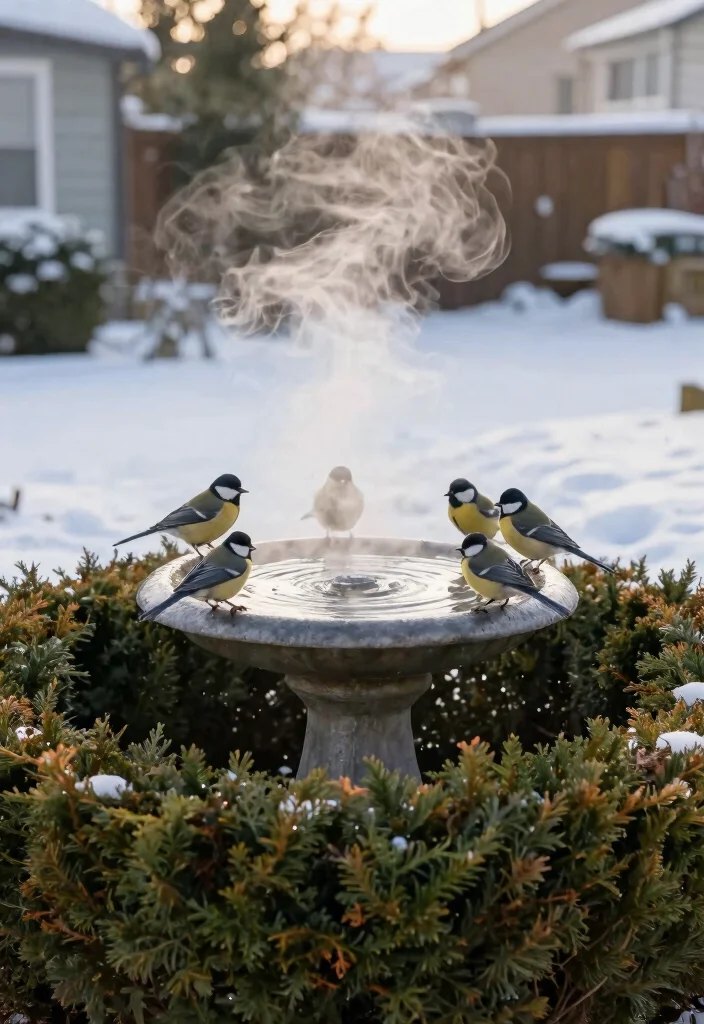
As winter chill sets in, birds need a dependable source of water that won’t freeze. Heated bird baths are a fantastic solution, offering a consistent supply of liquid water without the hassle of ice. These baths come equipped with built-in heaters that keep the water just above freezing, attracting more birds seeking this essential resource.
Not only do heated baths serve a practical purpose, but they also invite a wider variety of birds to your yard. This means less effort for you in changing frozen water during frigid days.
Benefits of heated bird baths:
– Prevent ice formation for year-round water availability.
– Attract a diverse range of birds to your garden.
– Eliminate the need for daily water changes in freezing weather.
Investing in a quality heated bird bath enhances your backyard birding experience and creates a welcoming habitat for winter wildlife.
4. Regularly Check for Ice
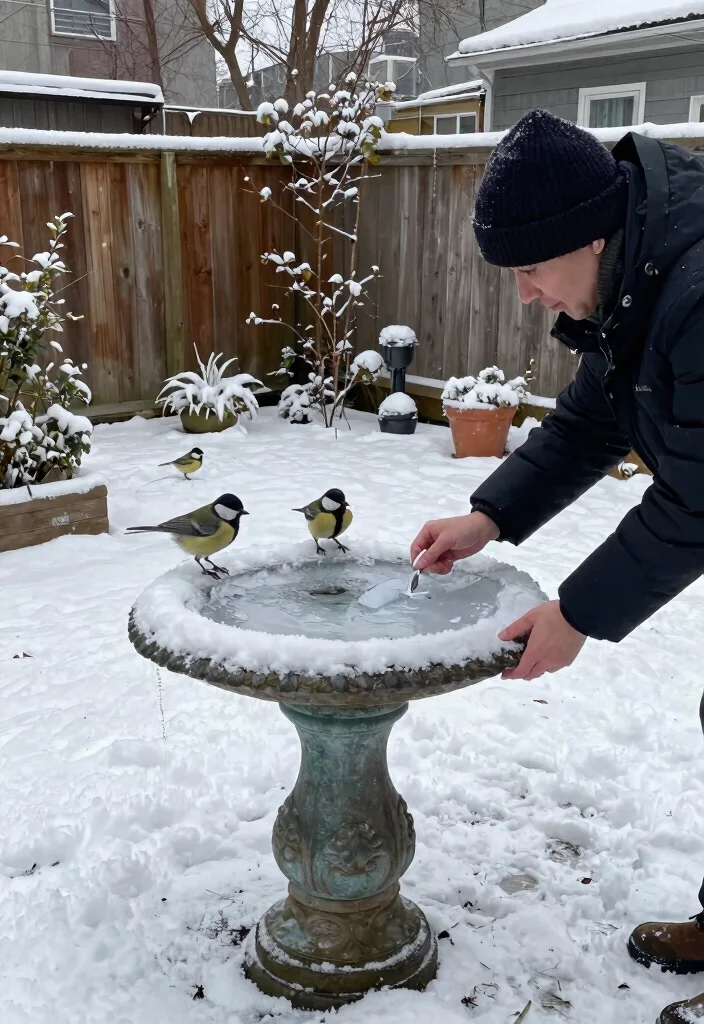
Monitoring your bird bath for ice is crucial during cold months. Even with a heated bath, unexpected cold snaps can lead to ice formation. It’s essential to break any ice that forms to ensure birds can access the water below. If you have a traditional bath, you can gently use a rubber mallet to crack the surface ice or frequently refresh the water to prevent freezing.
To prevent ice from forming, use a bath heater or place a floating object in the water. Keep an eye on weather forecasts to prepare for particularly cold nights and consider using stones to help regulate the water temperature.
Ice prevention tips:
– Use a bath heater or floating object to disrupt ice.
– Monitor forecasts for cold weather warnings.
– Add natural stones to help stabilize water temperature.
By staying vigilant about ice, you ensure a reliable resource for your avian visitors.
5. Introduce Natural Elements
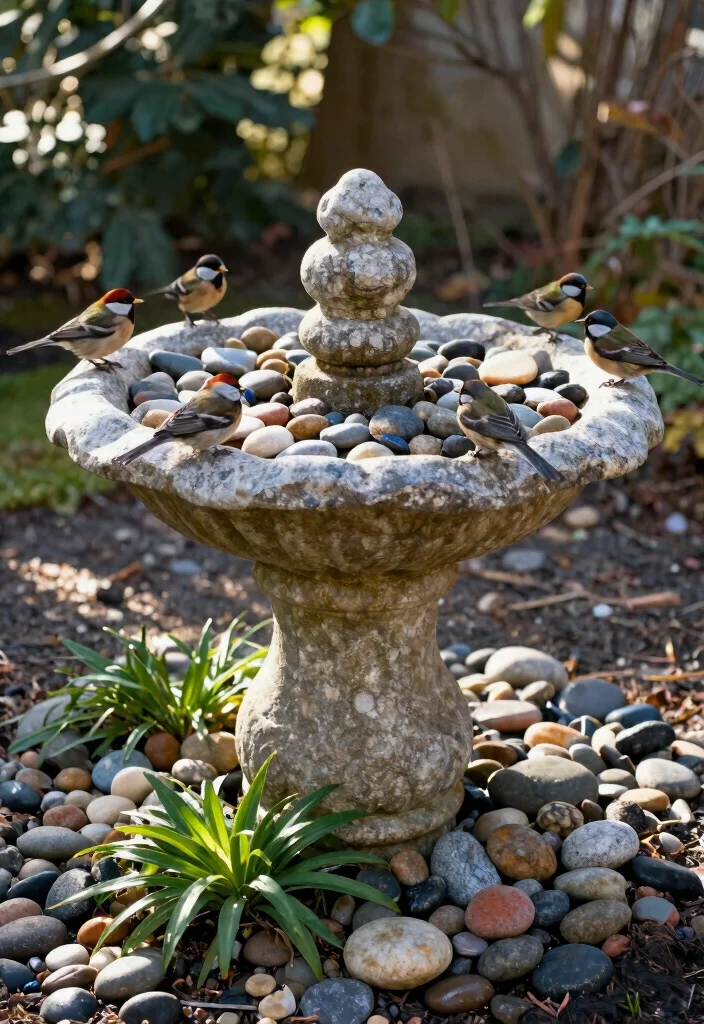
Enhancing your bird bath with natural elements can make it even more attractive to birds. Adding stones, pebbles, or floating logs can create safe perches, allowing birds to feel at ease while they drink or bathe. A few stones can also help keep the water shallow in certain areas, making it accessible for smaller birds.
Consider incorporating natural materials into your bird bath design. Smooth stones or pebbles can be placed at the bottom, while branches or logs can serve as perches around the bath. Adding plants like water lilies or native grasses around the edges also enhances the environment.
Ways to enhance your bird bath:
– Add smooth stones or pebbles for texture.
– Use branches as perches for easy access.
– Incorporate plants around the edges for beauty.
These natural additions not only beautify your bird bath but also create a thriving wildlife habitat in your garden.
6. Maintain Bath Structure
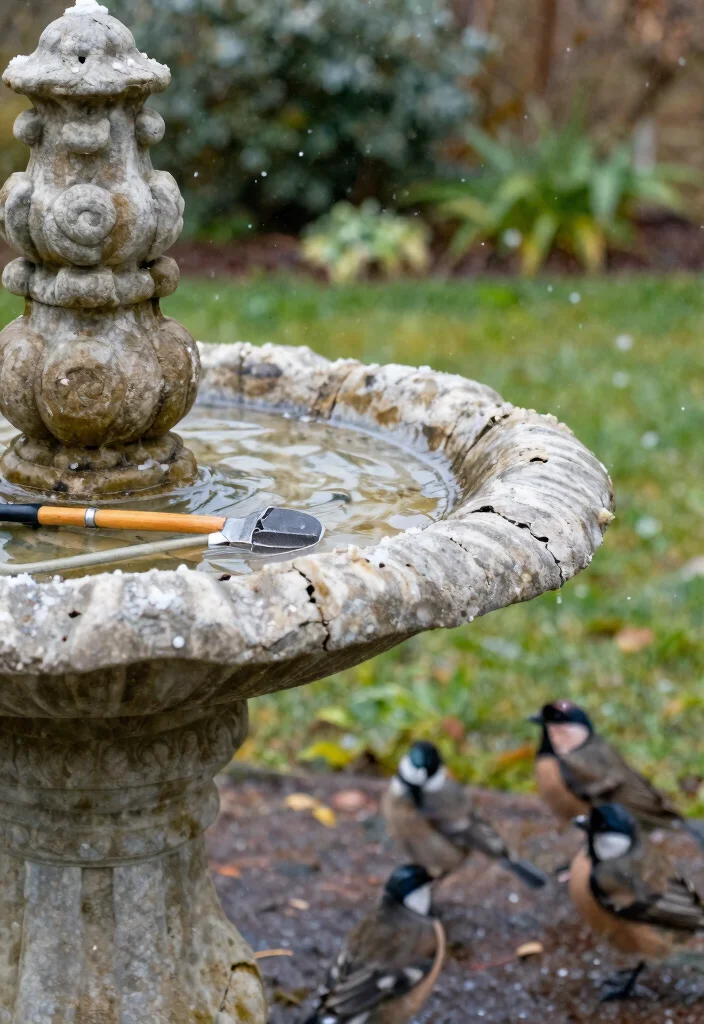
Consistent maintenance of your bird bath structure is essential for its longevity and attractiveness. Regularly check for any cracks, chips, or wear caused by winter weather. Promptly addressing these issues can prevent further damage. You might want to use a bird-safe sealant to repair any cracks and keep the structure sturdy. Additionally, ensure the base is stable to encourage bird visits.
Regular inspections can help you catch problems early. Clean and reseal any cracks that develop, and always check that your bird bath is level and secure.
Maintenance checklist:
– Inspect for visible damage regularly.
– Clean and reseal any cracks.
– Ensure the bath remains level and sturdy.
By maintaining your bird bath, you provide a safe and inviting oasis for birds all winter long.
7. Consider Creative Designs
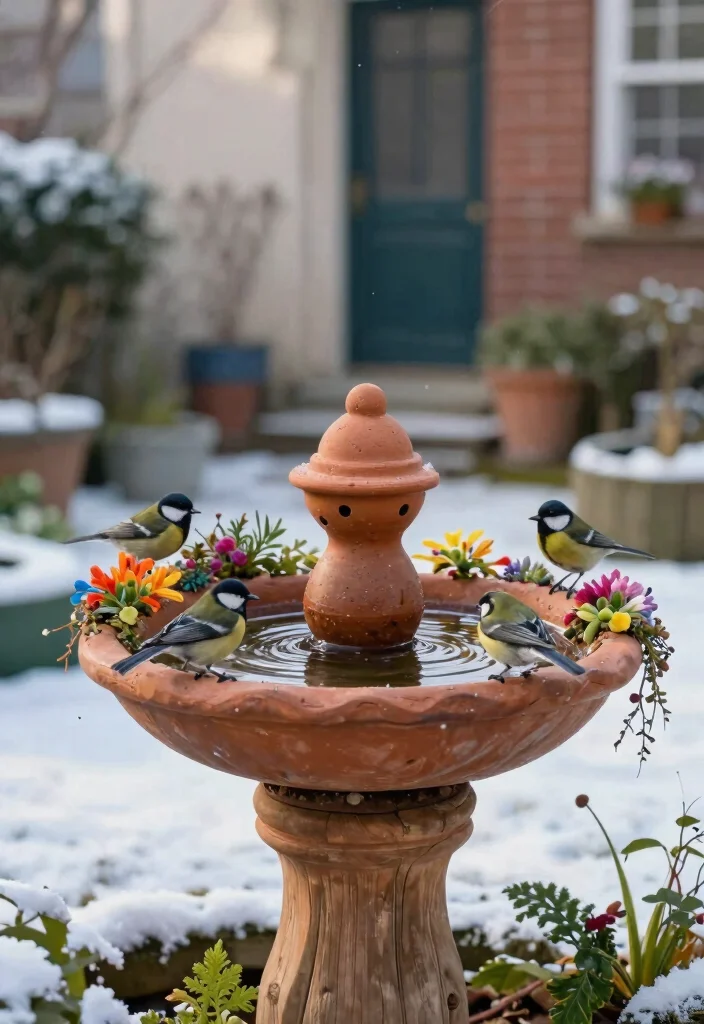
This winter, unleash your creativity with your bird bath design! Unique installations can attract different species and add artistic flair to your garden. From hanging bird baths to tiered fountains, innovative designs can enhance your birdwatching experience. You could even craft a DIY bird bath using materials like clay pots or reclaimed wood for a personal touch that supports wildlife.
Explore various creative options to make your bird bath a standout feature. Repurpose an old pot or bowl as a stylish bath, use an upside-down tomato cage as a stand, or install a cascading water feature that serves dual purposes.
Creative ideas to consider:
– Transform an old pot into a charming bird bath.
– Use a tomato cage creatively for height.
– Install a cascading feature for added beauty.
By experimenting with creative designs, you can create a stunning focal point in your garden while supporting winter wildlife.
Fun fact: In urban gardens, bird baths with creative designs attract 40% more feathered visitors in winter than plain basins. These winter bird bath maintenance tips start with a stylish design and boost hydration for birds you’ll love watching all season.
8. Add Food Sources Nearby
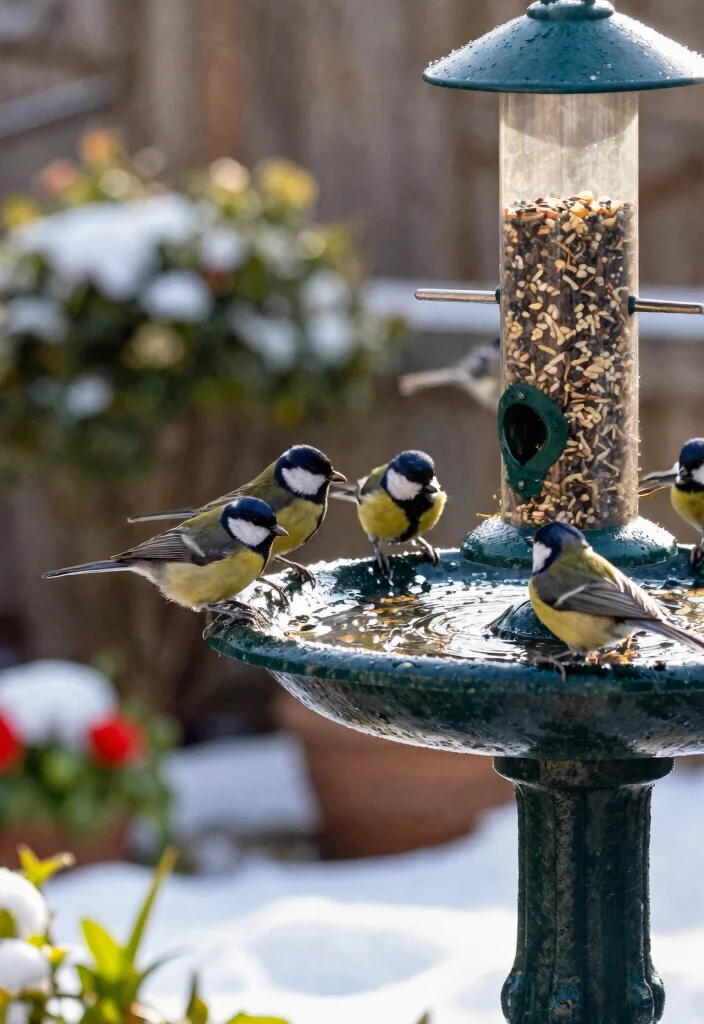
To elevate your backyard birding experience, think about placing food sources close to your bird bath. Feeders filled with seeds, suet, or peanut butter will attract a variety of birds, turning your garden into a lively hub. The combination of food and water creates a reliable sanctuary, especially valuable during winter when resources are limited.
Choose high-energy foods suitable for different bird species and place feeders where they can be seen from the bird bath, creating a safe feeding area. Regularly clean the feeders to avoid mold and keep birds healthy.
Bird feeding tips:
– Offer high-energy foods for various species.
– Position feeders within sight of the bird bath.
– Keep feeders clean to promote bird health.
By providing both food and water, you’re not only nurturing winter wildlife but also enriching your garden’s vibrancy and activity.
9. Document Your Birding Experience
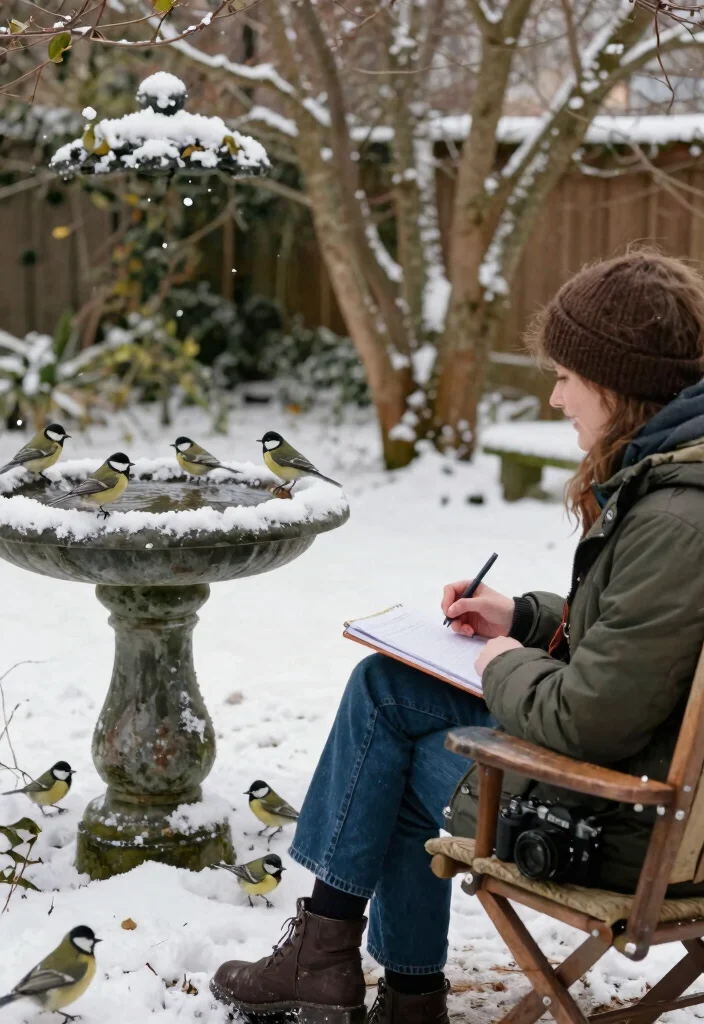
Finally, capture your birding journey! Take photographs or maintain a journal of the different species that visit your winter bird bath. This practice not only deepens your appreciation for nature but also contributes to citizen science efforts. Sharing your observations with local birding groups or online platforms can inspire others to engage in supporting winter wildlife.
To document effectively, use a notebook or an app to track bird species and their behaviors. Share your photos on social media to connect with fellow enthusiasts, or set up a small camera to record those fleeting moments.
Tips for documenting:
– Keep a notebook or use an app for tracking.
– Share photos online to connect with others.
– Consider a camera for capturing events.
Reflecting on your experiences can deepen your love for nature and motivate you to continue supporting these delightful creatures in your garden.
Documenting your birding journey turns every winter visit into a story worth sharing. Quick photos or a simple journal become powerful winter bird bath maintenance tips in practice. Sharing observations with local groups or online inspires others to support winter wildlife.
Conclusion
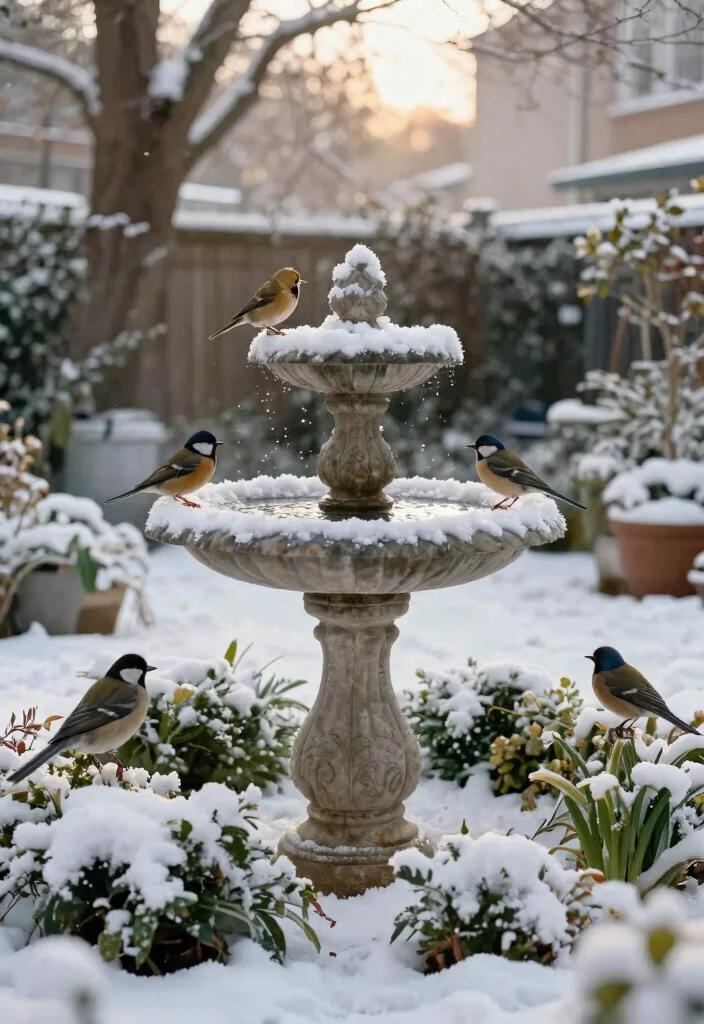
By following these nine essential winter bird bath maintenance tips, you’ll create a welcoming environment for our avian friends and enhance your urban garden’s seasonal charm. From keeping the water clean to being creative with designs, your efforts will significantly support local wildlife. Remember, every small step counts in nurturing winter wildlife relationships. Happy birding!
Note: We aim to provide accurate product links, but some may occasionally expire or become unavailable. If this happens, please search directly on Amazon for the product or a suitable alternative.
This post contains Amazon affiliate links, meaning we may earn a small commission if you purchase through our links, at no extra cost to you.
Frequently Asked Questions
What are the essential winter bird bath maintenance tips for a small urban garden?
Winter bird bath maintenance tips for a small urban garden focus on safety and simplicity. Use a shallow bath (about 1–2 inches deep) to reduce drowning risk and freeze damage, and choose a basin designed for cold weather. Place the bath in a sunny, sheltered spot to slow ice formation and near perching branches for easy access. For cleanliness, replace water every 2–3 days and clean the basin with a 1:10 white vinegar solution to avoid soap residues, which can irritate birds. If possible, add a thermostat-controlled bird bath heater or a small solar pump to keep a portion of water unfrozen, providing reliable winter wildlife support and continuing backyard birding opportunities. Check for cracks and rough edges after freezes and replace if needed.
How can I prevent ice and keep water available for backyard birds during winter?
Keep an open water feature by using a bird bath heater or a solar-powered fountain and create a shallow, wind-sheltered basin. A sunny, east-facing spot helps ice melt faster. If you don’t use a heater, plan to visit and refresh water multiple times a week or more to prevent complete freezing. Add a small rim or saucer to reduce surface area, and provide winter wildlife support with a nearby shrub for cover. Avoid salt near the bath, since it can harm birds.
What installation tips maximize bird bath care in winter for small spaces?
Choose a stable base that keeps the bath level and safe in windy urban settings. Mount on a short pedestal or set on a deck to keep it above ground frost while remaining accessible to birds. Position near evergreen or dense shrubs to offer shelter from predators and wind, but keep it away from heavy foot traffic. Ensure proper drainage so melt water doesn’t pool around your garden, and consider a low-profile, wide rim for safe access. This setup aligns with garden winter prep and bird bath installation best practices.
How often should I clean and refresh the bird bath in winter, and what’s the best method?
Check the bath weekly and refresh water every 1–3 days in freezing weather to avoid stagnant water. To clean, rinse with warm water and scrub gently with a brush, using a white vinegar solution (1:10) if needed; avoid soap, which can leave residues that harm birds. Dry and refill with fresh water before birds get thirsty again. Regular cleaning is part of bird bath care and winter wildlife support.
What are some simple garden winter prep ideas to attract birds to your bath?
Pair your winter bird bath with native shrubs and evergreen plants that provide shelter and food, turning your space into reliable winter wildlife support. Keep the water feature visible from feeders and close to resting perches for easy access. Add a small stone or branch nearby for birds to perch, and install a protective cover or lid during extreme cold to reduce water loss. Keep the area pesticide-free and consider a drip or gentle fountain to help keep water circulating, boosting backyard birding in winter.

![15 Beautiful Water Fountain Planter Garden Ideas [Must See]](https://homception.com/wp-content/uploads/2026/04/15-Beautiful-Water-Fountain-Planter-Garden-Ideas-Must-See-150x150.webp)